

5-Minute Men's Health:
Clomiphene's Libido Gap, the Overhyped Eating Window, and a Real Option Beyond CPAP
Welcome to The RECLAIM Report, my weekly newsletter where I break down evidence-based men's health, performance, hormones, sleep, body composition, and longevity in five minutes or less.
No miracle hacks. No wellness theatre. No influencer lab-coat cosplay. Just practical health strategy for men who want their body to keep up with their ambition.
On deck today:
Why a pill that raises testosterone as well as TRT still isn't the same as TRT
Why your liver doesn't care what time you stop eating
A CPAP alternative that works for most of the right patients, and none of the wrong ones
Happy Sunday,
Every few months a new "TRT alternative" makes the rounds, usually pitched as the version with no needles, no fertility tradeoff, and no downside. The pitch is rarely wrong about the mechanism. It's usually wrong about what actually happens to the man taking it.
This week's research is a good reminder that a lab value and a symptom are not the same thing, a fasting window and a treatment are not the same thing, and a device working "for most patients" still requires figuring out who the device is actually for.
Here's what caught my attention this week.
1. Clomiphene can match TRT on paper. It didn't match TRT in the bedroom.
Clomiphene citrate keeps coming up in conversations with men who want a fertility-preserving alternative to testosterone therapy. The logic is reasonable. Clomiphene stimulates the body's own testosterone production instead of replacing it externally, which matters to men who still want to have children.
A 2026 systematic review and meta-analysis in the European Journal of Clinical Pharmacology pooled 11 comparative studies covering 1,512 men with hypogonadism, split roughly evenly between clomiphene and TRT. Overall testosterone increases were not significantly different between the two, and clomiphene performed comparably to testosterone gel specifically, though injectable testosterone produced higher levels in one smaller subgroup. The part worth sitting with is libido. In the three studies that measured it, TRT produced greater symptom improvement than clomiphene, even where the testosterone numbers looked similar.
That's the practical relevance. Matching a lab value does not guarantee matching a symptom response. Clomiphene remains a reasonable option for selected men with functional secondary hypogonadism who prioritize fertility, but it should be chosen because it fits that man's goals and physiology, not because it produces a number that looks like TRT on paper. The evidence here also has real heterogeneity and some risk-of-bias concerns, so this is a direction, not a verdict.
The move this week: if fertility preservation matters, clomiphene is worth a real conversation with your prescriber. If libido is the primary complaint, don't assume a similar testosterone level means a similar outcome. Ask what the treatment is actually optimizing for.
2. An eight-hour eating window did not outperform standard diet advice for liver fat
Time-restricted eating has been marketed as something close to a metabolic reset button, and liver health is one of the places that claim gets made most confidently.
A 12-week randomized controlled trial published in JHEP Reports assigned adults with overweight or obesity to either standard Mediterranean-diet guidance or an eight-hour eating window, scheduled early, late, or by participant preference. Adherence was high and there were no safety concerns, which is a genuine point in favor of the approach as a sustainable habit. But adding the restricted eating window did not produce a clear additional reduction in liver fat or visceral fat beyond what the dietary guidance alone achieved.
The practical relevance here is about what time-restricted eating is actually good for. It can be a useful structural tool for controlling intake, especially for men who eat mindlessly after 8 p.m. because the day finally went quiet. What it is not, based on this trial, is a special treatment for liver fat that works independently of diet quality and total energy balance.
The move this week: if an eating window helps you eat less without white-knuckling every meal, keep using it as a structure. Just stop expecting the clock itself to do the metabolic work. That's still diet quality, protein intake, and energy balance.
3. Hypoglossal nerve stimulation worked for about three out of four carefully selected CPAP-intolerant patients
CPAP remains the first-line treatment for obstructive sleep apnea, and it also remains a device a meaningful number of men simply will not wear consistently. Hypoglossal nerve stimulation, an implanted device that stimulates the nerve controlling tongue movement to keep the airway open, has been the main surgical alternative for years. The newer data helps clarify who it actually works for.
A 2026 systematic review and meta-analysis in the Journal of Clinical Medicine pooled 38 studies and 39 cohorts covering 3,220 adults with obstructive sleep apnea, most of whom had failed or couldn't tolerate CPAP. The pooled responder rate was 74%. On average, the apnea-hypopnea index fell by 23.3 events per hour, the oxygen-desaturation index fell by 14.5 events per hour, and daytime sleepiness scores improved by 4.5 points. Revision surgery occurred in about 5% of patients and explantation in about 4%. The catch is that response varied a lot between studies, and the usual suspects like baseline severity and BMI didn't explain most of that variability.
The practical relevance is that this is a legitimate option for the right patient, not a universal CPAP replacement. It's an implanted therapy with real surgical risk and a selection process that matters more than the marketing suggests.
The move this week: if CPAP genuinely isn't working after honest troubleshooting (mask fit, pressure settings, positional therapy), hypoglossal nerve stimulation is worth discussing with a sleep specialist. Go in expecting a selection conversation, not a guaranteed fix.
My favorite thing this week
My favorite thing this week had nothing to do with labs, sleep, hormones, or metabolic health. It was a watch quiz.
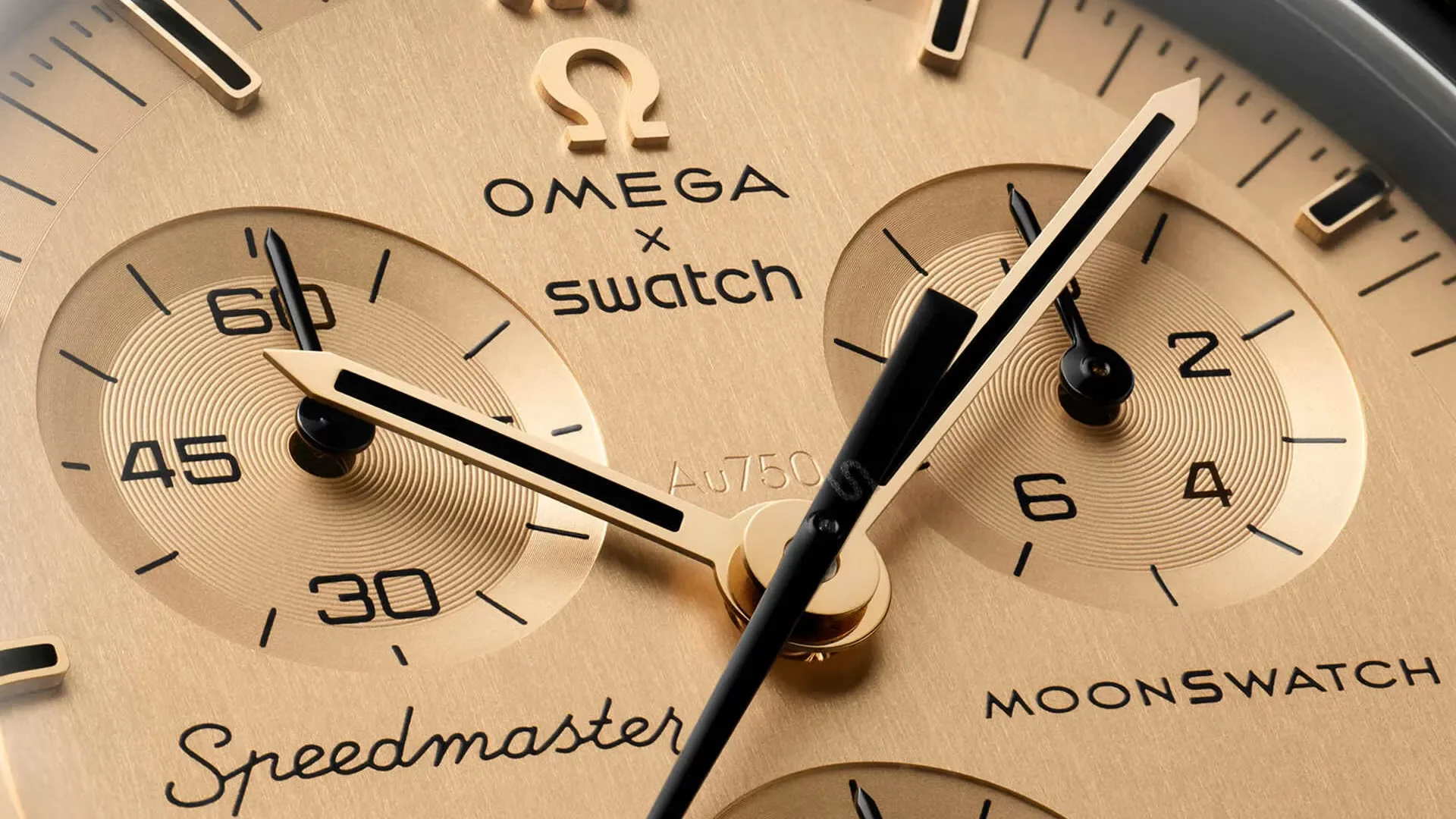
Swatch and Omega released the Mission To The Moon 1969, a limited MoonSwatch marking the Apollo 11 anniversary. Only 1,969 numbered watches are being made, and instead of the usual chaotic release, Swatch built an online quiz application where applicants had to answer questions about the mission for a chance to buy one. Reportedly about 1.2 million people applied for those 1,969 spots, which is absurd and also kind of great.
The watch uses 18K Moonshine Gold made from recycled vintage Omega spare parts, about 11 grams of it across the dial, hands, crown, and pushers. Swatch priced it based on the 1969 gold price rather than today's, a clever historical wink. The best part: the retail price reportedly sits below the current market value of the gold itself. Watches By SJX estimated the gold content at roughly US$1,064, against a retail price around US$570.
Yes, it's a marketing stunt. It's also one of the rare stunts that made people learn something, participate, and feel like part of a tiny collector moment. If I somehow get selected, I will pretend I was calm about it the entire time.
Client conversation of the week
My conversation of the week was with a dentist I work alongside in my building. She asked how the RECLAIM protocol was going, and I walked her through the value it brings, starting with baseline blood work.
She got interested fast, not just for herself but for her brother and her parents. Her reasoning was sound: knowing your baseline values matters at any age, and it matters more as medications start entering the picture with age. For her specifically, she's dealing with some stress and early perimenopausal symptoms, and she wants to know what's actually driving them rather than guessing.
That's the conversation I want to be having more often. Not "start this," but "measure this first." Baseline labs don't care how old you are or what your chief complaint is. They just tell you what's true right now, which is the only starting point that actually works.
One quote to finish your week strong
"There is nothing new under the sun."
Ecclesiastes 1:9
Fitting, for a week that had me thinking about a 1969 moon mission and 2026 gold pricing at the same time. Technology changes. The watch industry finds a new gimmick every year, and honestly, this one was fun. But the fundamentals underneath it, the metallurgy, the mechanics, the value of the materials, haven't moved.
Same with the body. New devices, new peptides, new apps, new supplements, new acronyms. The fundamentals of the RECLAIM protocol are sleep, nutrition, training, and knowing your numbers. That list hasn't changed and it isn't going to.
Final thought
The theme this week is judgment over shortcuts. Clomiphene can match a testosterone number without matching a symptom outcome, which is a reminder to treat the goal, not the lab value. An eating window can help you eat less without being a liver treatment in disguise. And a nerve stimulator can work well for the right CPAP-intolerant man while still requiring real patient selection, not blind adoption.
That's why RECLAIM exists. Not to chase whichever tool is trending, but to figure out what's actually driving the decline in energy, sleep, hormones, and body composition, then build a plan around the full picture.
If your body is no longer matching your ambition, start with clarity.
Book a RECLAIM fit call: www.reclaimhealth.ca/book
PS. If you're a man in your 30s, 40s, or 50s and your energy, sleep, body composition, or confidence has quietly slipped, RECLAIM was built for that exact conversation. Book the fit call and let's find the actual bottleneck.
References
Constantinou BT, et al. Clomiphene citrate versus testosterone replacement therapy in male hypogonadism: a systematic review of literature and meta-analysis. European Journal of Clinical Pharmacology. 2026. doi:10.1007/s00228-026-04134-3
Dote-Montero M, et al. Time-restricted eating, liver health, and fecal microbiota in adults with overweight or obesity: a randomized controlled trial. JHEP Reports. 2026. doi:10.1016/j.jhepr.2026.101956
Heiser C, et al. Hypoglossal Nerve Stimulation for Obstructive Sleep Apnea: A Systematic Review and Meta-Analysis on Responder-Based Outcomes and Between-Study Heterogeneity. Journal of Clinical Medicine. 2026;15(13):5180. doi:10.3390/jcm15135180
